
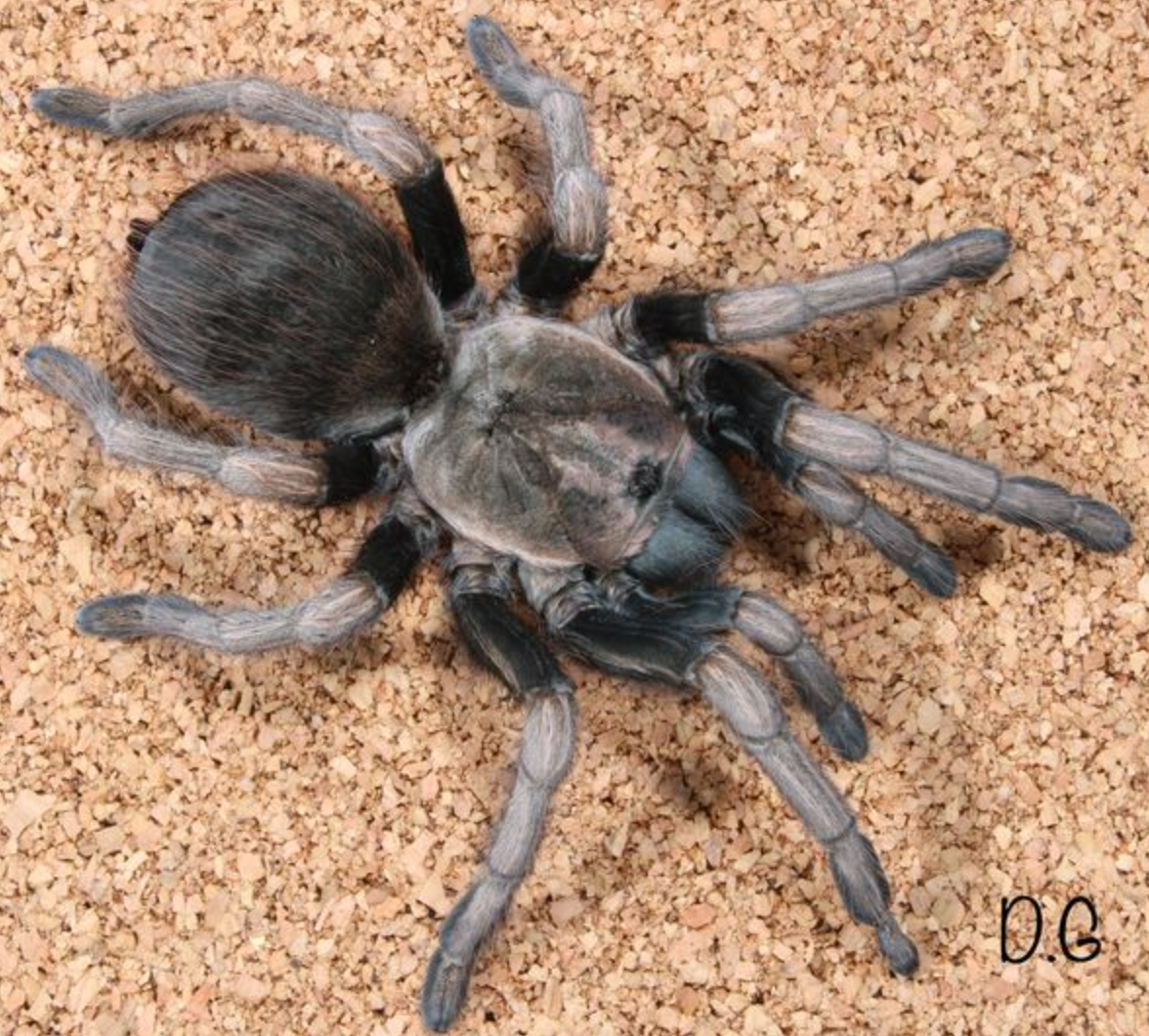
Scientific Name: Lasiodorides polycuspulatus
Common Name: Peruvian Blonde
Lifestyle: Terrestrial
Endemic Location: Peru
Adult Diagonal Leg Span (DLS): 7″
Growth Rate: Medium
Life Expectancy: Females 25 years / Males 10-14 years
Recommended Experience Level: Moderate
Lasiodorides polycuspulatus is a robust and large species native to Peru, where it inhabits dry, tropical, and subtropical regions. It is known for its beautiful golden-brown hairs covering its body, which gives it a characteristic “blonde” appearance. As a terrestrial species, it requires a spacious enclosure with appropriate substrate for burrowing. It grows quickly compared to some other species, and while not overly aggressive, it can be defensive and skittish, making it best suited for experienced tarantula keepers.
Behavior and Temperament: This species is known to be somewhat defensive and can be skittish when disturbed. It may assume a defensive posture or bolt if it feels threatened. Although not particularly aggressive, it will not hesitate to defend itself if it feels cornered. This tarantula can be challenging to handle due to its rapid movements and tendency to hide in burrows, making it more suitable for intermediate to advanced keepers.
Habitat and Environment Needs: Lasiodorides polycuspulatus requires a terrestrial setup with a deep substrate for burrowing. A mix of coconut fiber and peat moss is ideal to mimic its natural environment. Temperatures should be maintained between 24–28°C (75–82°F), with humidity levels kept around 60–70%. The enclosure should have a hide, and a shallow water dish should be provided. This species prefers a dry environment but needs access to water to drink.
Feeding: Lasiodorides polycuspulatus is an opportunistic feeder, consuming a variety of live prey such as crickets, locusts, and roaches. It feeds more frequently when young, and less as an adult. Be sure to provide appropriately sized prey and remove any uneaten food to avoid contamination. This species is a voracious feeder, particularly during its juvenile stages.
| Weight | 10 kg |
|---|---|
| Size | 2-3cm, 4-5cm |
Only logged in customers who have purchased this product may leave a review.
Related products
Invertebrates
Invertebrates
Invertebrates
Invertebrates
Invertebrates
Invertebrates
Invertebrates
Invertebrates
Reviews
There are no reviews yet.